
By Lindsay Morris
Trying to get pregnant after 35? Fertility expert Dr. Valerie A. Flores breaks down exactly what to to support your body and optimize your chances. From key supplements to smart lifestyle shifts, this essential guide helps you take control of your fertility journey.
In this article:

You may have heard the French phrase, mise en place, which translates to “everything in its place.” Just as a chef would prepare and organize ingredients for a big meal, couples trying to conceive (TTC) should lay the groundwork. This preparation can improve the odds of pregnancy. That, in some cases, translates to significant lifestyle changes.
Now is the time to get your health in order and plan ahead for a healthy pregnancy, says Valerie A. Flores, M.D., a reproductive endocrinologist and infertility specialist who serves as a physician at San Diego Fertility Center. Flores specializes in treating patients with endometrial disorders and endocrine-related conditions, and provides services, such as egg freezing, gentle in vitro fertilization, and gender selection. She is also an assistant professor adjunct at the Yale School of Medicine.
Flores shares actionable steps women can take to improve their chances of a healthy pregnancy, especially after the age of 35.

Embrace a Mediterranean diet
Introduced by the Harvard School of Public Health, the Oldways Preservation and Exchange Trust, and the European Office of the World Health Organization, the Mediterranean diet food pyramid prioritizes plant-based foods while rethinking meat consumption. Additionally, it recommends eating whole grains instead of refined options and incorporating healthy fats, such as avocados, nuts, and seeds. Since its publication, many studies have linked the diet to a reduced risk of diabetes, heart disease, strokes in women, and cancers while improving mental and gut health.
Flores notes there is also research pointing to its connection to reproductive health. For example, a December 2023 review in the American Journal of Obstetrics and Gynecology found that a Mediterranean diet may support fertility and healthy gestational weight, while also reducing the risks of gestational diabetes by 26%, premature birth by 55% (especially when adopted in the first trimester), gestational hypertension by 29%, and preeclampsia by 18%.
“It’s really minimizing red meat and fatty foods,” she says. “It’s focusing more on fish, chicken, vegetables, and healthy fats.”

Maintain a Healthy Weight Range
A Mediterranean diet may also help you lose weight, which is particularly important during conception and pregnancy. More than 41% of American adults aged 20 and over are considered obese with a body mass index (BMI) of over 30, which the American College of Obstetricians and Gynecologists notes as a factor in infertility.
Once pregnant, an obese woman is at a greater risk for birth defects, preterm birth, stillbirth, and a condition called macrosomia—when a fetus grows larger than normal—raising the likelihood of cesarean delivery and the baby’s risk of obesity later in life. Having too high a BMI can also complicate diagnostic tests, as excess fat can make it harder to perform an ultrasound or check fetal heart rate during labor.
For optimal results, aim for a healthy weight—a BMI between 18.5 and 24.9, which you or your doctor can calculate based on your height. The Centers for Disease Control and Prevention (CDC) offers a guide for weight gain during pregnancy.

Limit Caffeine
“For patients who are actively trying to conceive, we recommend no more than one to two cups of coffee—no more than 200 milligrams (mg),” Flores says.
This will help you prepare for pregnancy when the American Society for Reproductive Medicine and the American College of Obstetricians and Gynecologists’ Committee on Gynecologic Practice recommend drinking fewer than 200 mg.
“Of course, be mindful of where you get your coffee because certain coffees have a very high caffeine content,” warns Flores.
It’s worth noting that your morning brew isn’t the only source of caffeine. Energy drinks, sodas, and chocolate can also contribute to your daily intake.

Stop Drinking Alcohol
Flores advises her patients to avoid alcohol altogether. “Sometimes if patients are trying on their own, they may not know that they’re pregnant yet and still be drinking,” she says.
Research has demonstrated that any amount of alcohol can negatively affect your heart health and even shrink your brain. And evidence shows there is no safe amount of alcohol when TTC. Drinking can harm a fetus just days after conception. Alcohol may also interfere with assisted reproductive technology (ART), like IVF. It can lower the likelihood of embryo implantation and live birth.

Say No to Smoking and/or Cannabis Use
“Smoking tobacco does lower egg count in a given patient, and alters sperm parameters,” says Flores. “We also recommend stopping marijuana use, because it can make it harder for women to ovulate regularly, and for men, it likely negatively affects sperm parameters as well.”
Smoking can increase the odds of infertility by 60%, says the Practice Committee of the American Society for Reproductive Medicine. In women, it can delay conception and increase the risk of spontaneous abortion, ectopic pregnancy, and early menopause. Female smokers also have 44% lower AMH (anti-Müllerian hormone) levels, indicating diminished ovarian reserve. For men, can affect the sperm shape and structure and reduce their ability to swim efficiently.
The committee notes that smokers undergoing IVF may require more treatment cycles and higher doses of fertility medication. Even with ART, smoking has been associated with lower rates of implantation rates and live births. Additionally, it’s linked with a higher risk of miscarriage.

Take Prenatal Vitamins and Fertility Supplements
Flores recommends that women TTC invest in some good-quality prenatal vitamins, particularly those containing folic acid. The Centers for Disease Control and Prevention (CDC) advises women who want to get pregnant to take about 400 micrograms (mcg) of this synthetic form of vitamin B9 to help prevent neural tube defects (NTDs), which can affect a baby’s brain, spine, or spinal cord.
“Again, in patients who are trying on their own, they may not exactly know when they get pregnant initially,” Flores says. So, she recommends starting your prenatal supplement regimen as soon as you decide to stop contraception/start trying to conceive.
CoQ10—short for coenzyme Q10—is another supplement Flores endorses. “This should help with egg quality and minimize any inflammation at the level of the eggs,” she says. “Egg quality, unfortunately, does decline with age.”

Flores also suggests stocking up on omega-3 fatty acids, such as fish oil (or flaxseed oil for vegetarians and vegans), as it also helps decrease inflammation. Research indicates that it can increase the likelihood of natural conception by 1.5 times compared to those who do not consume the supplement.
Additionally, she notes that NAD+ (nicotinamide adenine dinucleotide) and melatonin can help improve egg quality.
Finally, she recommends myo-inositol, particularly for patients with insulin resistance due to polycystic ovarian syndrome (PCOS), a frequent cause of infertility.

Book an Appointment
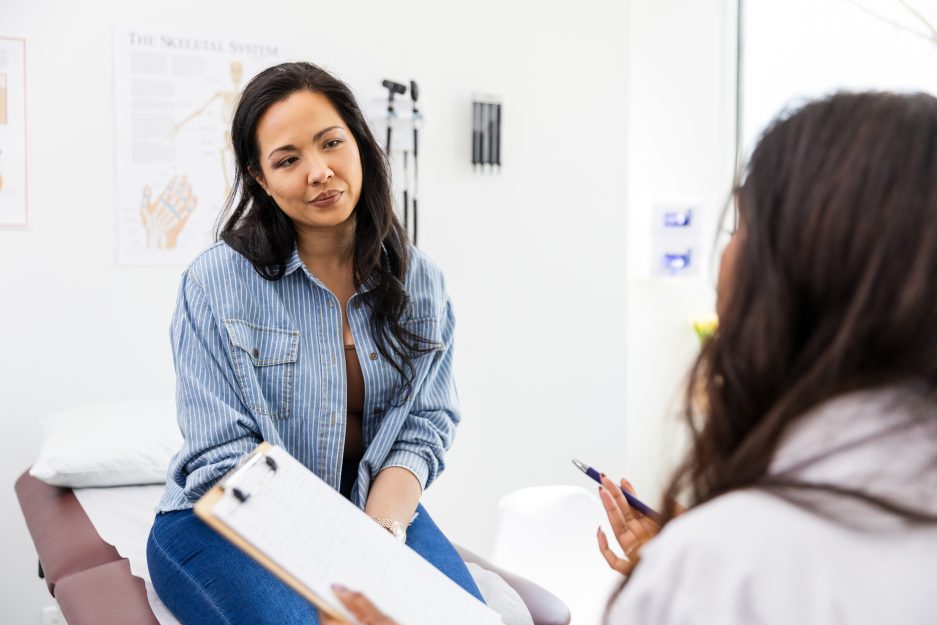
“I highly encourage patients to talk with their OB-GYN,” says Flores. “They’re usually the first line, making sure you’re up to date with your routine healthcare maintenance—whether that’s checking your thyroid, having a mammogram, or having your pap smear done at the appropriate time—as well as starting the discussion regarding preconception counseling.”
Then, consider your options. For example, might you be a candidate for fertility treatments?
“It’s never too early to see a fertility doctor,” says Flores. “If you’re having a hard time becoming pregnant, or having trouble obtaining the answers to your questions, even if you’re trying naturally, we’re a great resource because we went through a fellowship in reproductive endocrinology and infertility and are trained to not only discuss fertility treatment, but also discuss ways to maximize natural conception; we’re always happy to be here for patients.”

Remember: These are lifestyle changes that exist to support fertility and a healthy pregnancy. By taking simple, intentional steps, you can feel more empowered on your path to conception and welcoming a healthy baby.
“Taking care of yourself now can give you the best chance of pregnancy later,” says Flores.
By improving your diet, limiting caffeine, quitting drinking and smoking, and starting the right supplements today you can make a big difference tomorrow.